
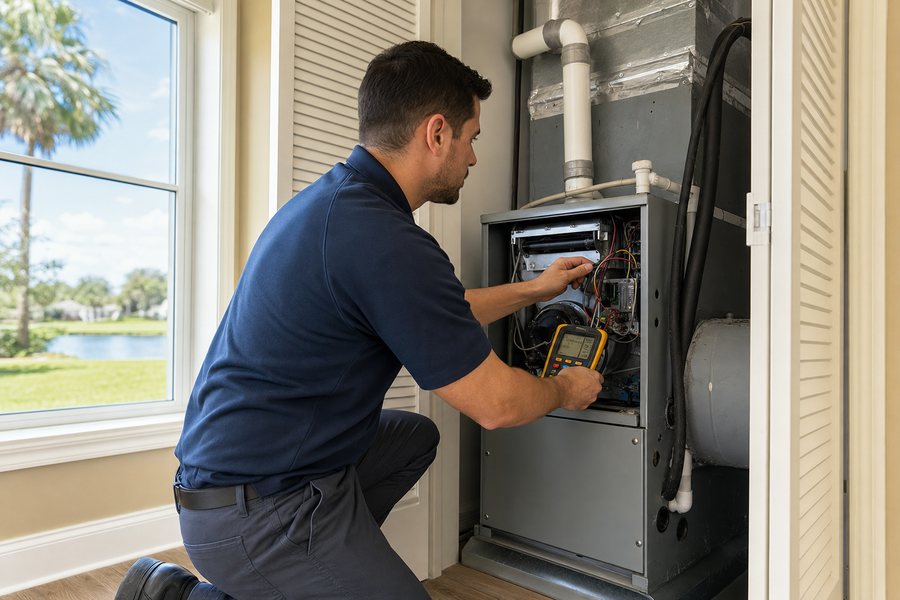
Heating installation adds or replaces the equipment that warms a Riverview home. Depending on the property and existing cooling system, the solution may be a heat pump, electric heat, a furnace, or compatible components within a combined HVAC system.
The installation should be planned around the home’s heating load, existing ducts and airflow, electrical or fuel requirements, equipment compatibility, thermostat controls, drainage where applicable, and safe service access.
Choosing the heating approach
A heat pump provides both cooling and heating by moving heat. A furnace produces heat and uses the air-distribution system to deliver it. Existing equipment, energy source, electrical capacity, comfort preferences, and how the system will pair with cooling all affect the choice.
The decision should also account for auxiliary or backup heat, thermostat compatibility, available installation space, and whether current ducts can move the required airflow.
- Heating-load and airflow needs
- Heat-pump, electric, or furnace configuration
- Compatibility with cooling and controls
- Electrical, fuel, drainage, and access conditions
Installation and operating checks
The work includes setting and connecting the heating equipment, integrating controls and air distribution, and completing the required startup procedure. Checks should confirm thermostat response, heating stages, airflow, normal cycling, and auxiliary functions that apply to the installed system.
The homeowner should understand normal operation, filter access, thermostat modes, and the maintenance needs of the selected equipment.
New heating versus furnace replacement
This service covers the broader choice of adding or replacing residential heating equipment. If the project specifically removes an existing furnace and installs another furnace, use the furnace replacement page. For care of an existing heat pump, use the heat-pump maintenance page.
Frequently asked questions
What heating systems are common options for Riverview homes?
Heat pumps, electric heating components, and furnaces can all be options. The existing cooling system, ducts, energy source, electrical capacity, and comfort needs determine what fits.
Can new heating use the existing ducts?
Possibly. The ducts should be checked for condition, leakage, size, return-air capacity, and the airflow required by the new equipment.
Why do thermostat settings matter during heating installation?
The control must be configured for the equipment type, stages, reversing valve where applicable, and auxiliary heat so the system operates in the intended sequence.