
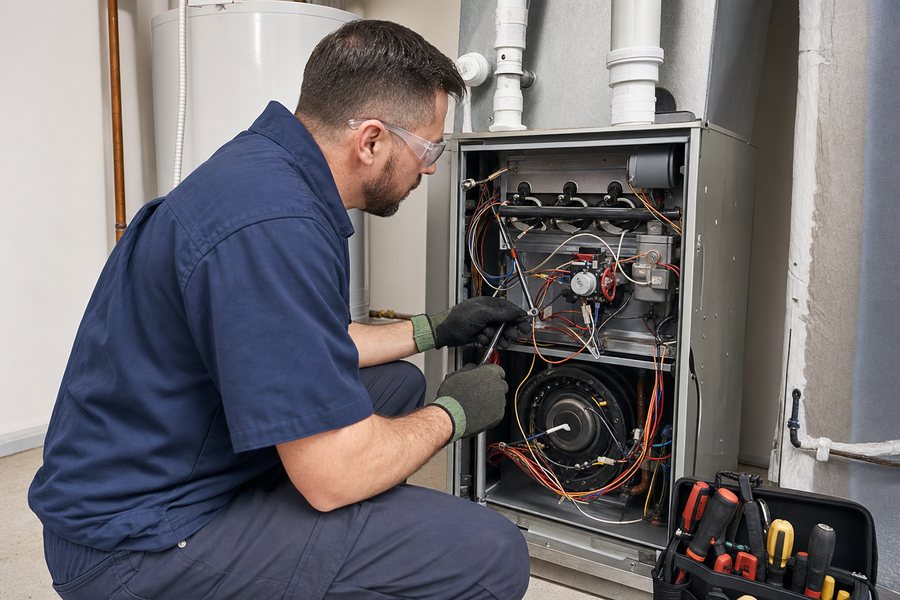
Furnace replacement removes an existing residential furnace and installs compatible new heating equipment. HVAC in Riverview services gas and electric furnaces for Riverview homes and can evaluate whether a repair or replacement path fits the equipment’s condition.
A replacement must work with the home’s air-conditioning equipment, ducts, controls, electrical service, and fuel or venting requirements that apply to the system. Repeating the old capacity without reviewing those conditions can preserve an existing comfort or airflow problem.
When to evaluate replacement
A major component failure, recurring repairs, unreliable heat, abnormal cycling, or compatibility problems can justify a replacement evaluation. The diagnosis should identify the failed component and overall equipment condition before comparing repair and replacement.
Safety concerns require prompt attention. Do not keep operating heating equipment that produces smoke, burning odors, visible damage, or another condition that appears unsafe.
- Recurring breakdowns or unreliable heating
- A major failed component
- Airflow or compatibility problems
- Observed damage or safety concerns
What must match the home
Capacity and blower performance should support the heating load and the connected duct system. The furnace must also integrate with the cooling coil, thermostat, stages, filter arrangement, electrical supply, and any applicable fuel, combustion-air, or venting requirements.
Startup should verify thermostat response, stage operation, airflow, temperature performance, and safety controls appropriate to the installed equipment.
Furnace replacement versus broader heating installation
This service covers replacement of an existing furnace with another furnace. Homeowners comparing a furnace with a heat pump or adding a heating system should use the broader heating installation page. Repair questions remain part of the homepage’s residential HVAC repair service.
Frequently asked questions
Can a new furnace work with the existing AC?
It may, but the furnace, blower, cooling coil, controls, ducts, and required airflow must be compatible.
Should furnace replacement repeat the old system size?
Not automatically. The home’s load, ducts, airflow, equipment pairing, and past comfort should be reviewed before capacity is selected.
What should be tested after furnace replacement?
Testing should cover thermostat response, heating stages, blower operation, airflow, temperature performance, normal cycling, and applicable safety controls.